
Uncategorized
Load Cell Pedals Explained: The Upgrade That Actually Makes You Faster
Jul
Here’s a truth every sim racing coach repeats: the fastest upgrade you can buy isn’t a stronger wheel — it’s a better brake pedal. Braking is where lap time lives, and it’s where most sim racers give away seconds without realising. This guide explains what load cell pedals are, why they transform your consistency, and how to upgrade the pedals you already own.
The Problem With Standard Pedals
Entry-level pedals use a potentiometer: braking force is measured by how far the pedal travels. Push it halfway, get 50% brake. The problem is that your leg is terrible at remembering distances. Under pressure, two “identical” braking inputs can vary wildly, which is why your braking points wander lap to lap.
How a Load Cell Works
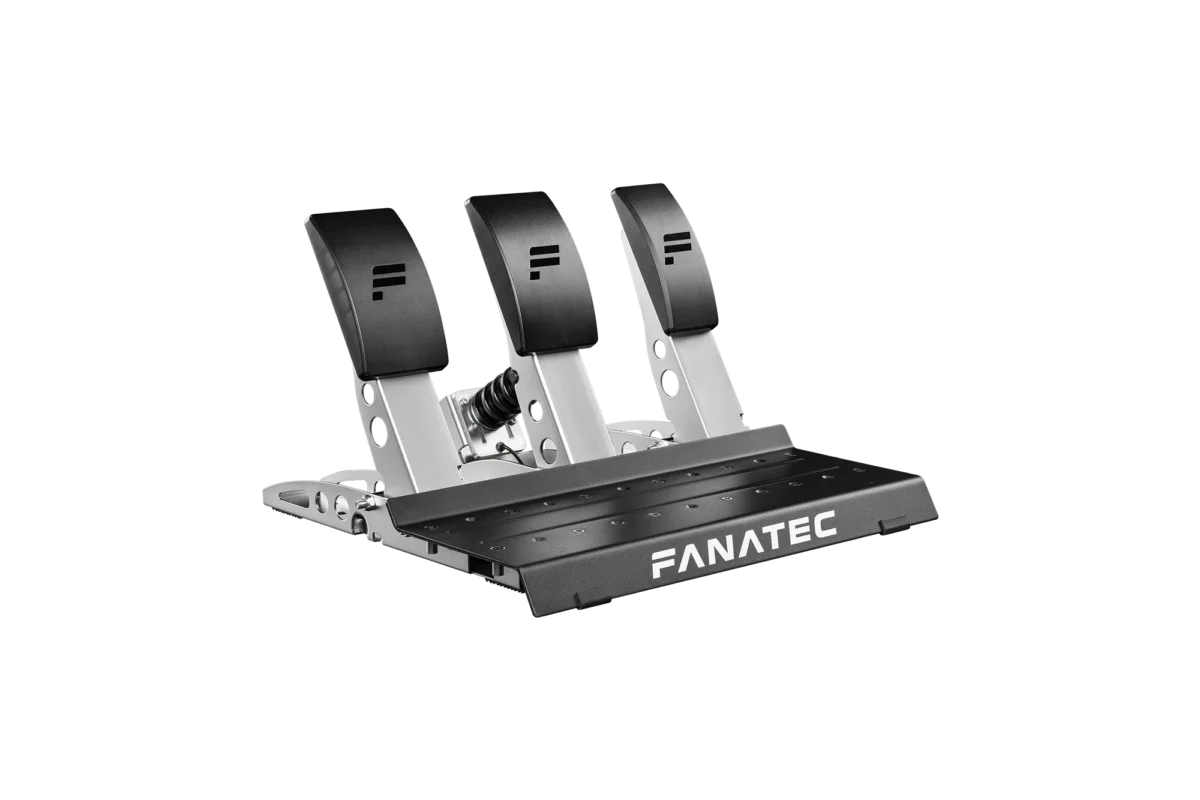
A load cell measures pressure instead of travel — exactly how the brake in a real race car works. The pedal barely moves; braking force comes from how hard you push against resistance. Your muscles remember pressure far more precisely than distance, so trail braking becomes repeatable, threshold braking becomes a feeling rather than a guess, and your braking points stop drifting around.
The improvement isn’t marginal. Most drivers who switch to a load cell brake report their most consistent laps ever within a week, because braking consistency compounds: hit the same brake point with the same pressure and the whole corner falls into place.
Tuning Pedal Feel to Your Driving
Great pedals are adjustable pedals. Elastomer stacks let you change the stiffness and progression of the brake — a softer feel for street-car sims, a rock-hard short pedal for formula cars. Our Elastomer Kit lets you tune that resistance curve, and a Firm Throttle Spring adds precision to your right foot too. Set up correctly, your throttle control out of slow corners improves almost as much as your braking.
The Upgrade Path
You don’t have to bin your current pedals. If you’re running La Prima pedals, the La Prima to Forte Upgrade Kit brings them up to Forte specification. Add the Initium Clutch Upgrade for a third pedal — essential for heel-and-toe downshifts in historic content and manual street cars — or the Invicta Long Travel Kit if you prefer more pedal movement before the pressure builds. Fresh pedal face plates sort grip and heel positioning.
Mounting Matters as Much as the Pedals
A load cell brake can take 50 kg+ of pressure, and if your pedal deck slides or flexes, you lose the very consistency you paid for. Hard braking demands solid mounting — a proper cockpit with an integrated pedal deck, matched to your setup as covered in our Australian sim racing setup guide.
Bottom Line
If you have $300–$500 to spend and you’re deciding between a wheel upgrade and a pedal upgrade, upgrade the pedals. Pair a load cell brake with a direct drive wheelbase and you have the two components that genuinely make you faster — everything else is immersion.
