
Uncategorized
How to Choose a Sim Racing Setup in Australia: Wheels, Pedals & Cockpits (2026 Guide)
Jul
Buying your first sim racing setup in Australia can feel overwhelming. Direct drive wheelbases, torque figures, quick releases, load cell pedals, aluminium profile cockpits — the jargon piles up fast, and the price range runs from a few hundred dollars to well over five thousand. This guide breaks down exactly what matters, what doesn’t, and how to build a setup that fits your budget, your space, and the kind of racing you want to do.
Start With the Wheelbase: Why Direct Drive Is the Standard in 2026
The wheelbase is the motor that drives your steering wheel and delivers force feedback — it’s the single most important component in any sim rig. Older belt-driven and gear-driven wheels have largely been replaced by direct drive (DD) technology, where the wheel connects straight to the motor shaft. The result is sharper detail, zero slack, and force feedback that tells you exactly what the car is doing at the limit.
Direct drive wheelbases are graded by peak torque, measured in newton metres (Nm):
- 5 Nm — entry level. Plenty for learning racecraft and enjoying titles like iRacing, Assetto Corsa and Gran Turismo 7. A bundle like the CSL DD QR2 Ready2Race Bundle (5 Nm) gets you a complete wheel, base and pedals for around $626.
- 8 Nm — the sweet spot. Noticeably stronger self-aligning torque and more detail under load. The CSL DD QR2 Ready2Race Bundle (8 Nm) is the most popular starting point for serious beginners, and the GT3 version adds a round wheel better suited to GT and endurance racing.
- 12–15 Nm — enthusiast grade. This is where sim racing starts to feel physical. Rally and drift drivers in particular benefit from the faster, stronger corrections of something like the ClubSport DD Ready2Race Rally Bundle (12 Nm).
- 25 Nm — professional strength. The Podium DD (25 Nm) delivers the same forces pro drivers train with. It demands a rigid cockpit — more on that below.
Our honest advice: most Australians starting out are best served at 8 Nm. It leaves headroom to grow without paying for torque you’ll wind down anyway. Still weighing up drive technologies? Read our deep dive: Direct Drive vs Belt-Driven Wheels.
PlayStation, Xbox or PC? Check Compatibility First
Compatibility is the most common — and most expensive — mistake first-time buyers make. PC racers can use anything. Console racers need licensed hardware. If you race Gran Turismo 7 on PS5, look at the Gran Turismo DD Pro (8 Nm) or the flagship Gran Turismo DD Extreme (15 Nm) — both are PlayStation-licensed direct drive wheels that also work on PC. We’ve compared every option in our guide to the best wheel for Gran Turismo 7 in Australia.
Pedals: Where Lap Time Actually Comes From
Ask any coach: consistent braking is worth more lap time than any steering upgrade. Entry bundles include capable pedal sets, but the upgrade path matters. A load cell brake measures pressure rather than travel, which is how a real race car brake works — your muscle memory becomes repeatable. Upgrades like the La Prima to Forte Pedal Upgrade Kit or the Elastomer Kit let you tune pedal feel to your driving style, and additions like the Initium Clutch Upgrade complete a three-pedal setup for heel-and-toe work. For the full picture, see Load Cell Pedals Explained.
The Cockpit: Rigidity Is Everything
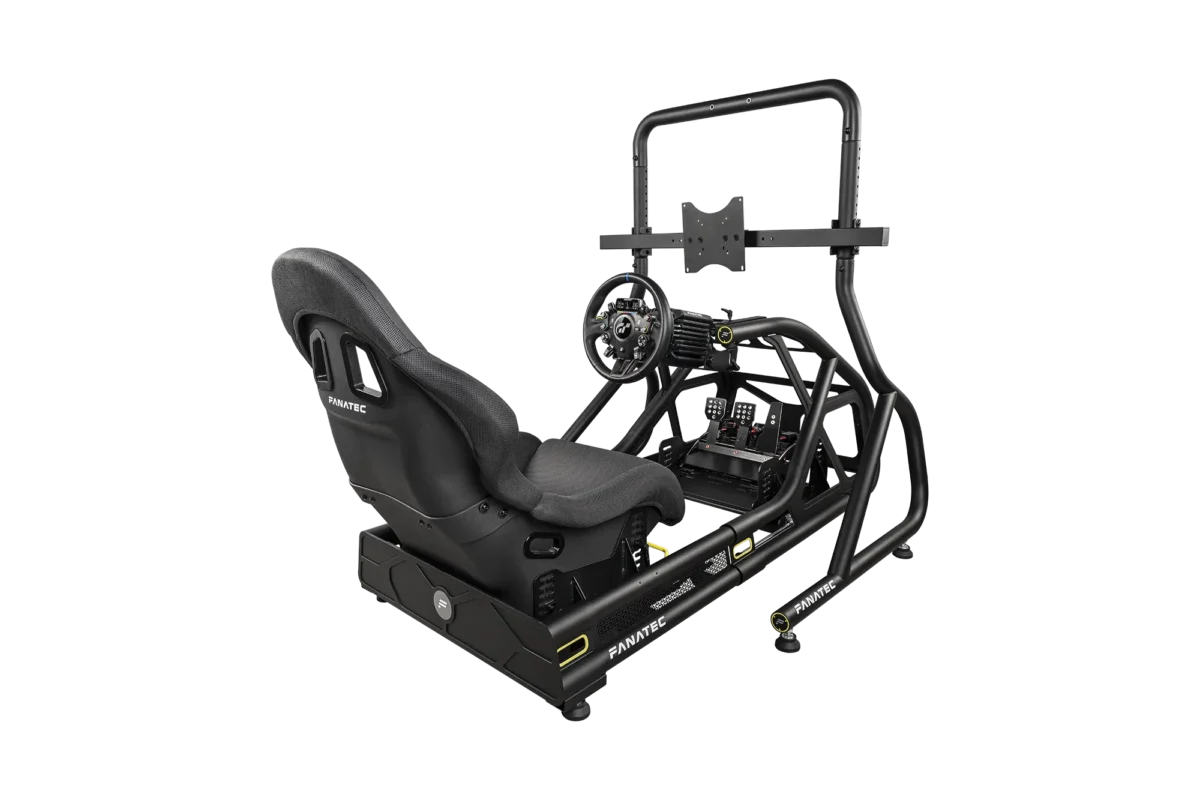
A powerful wheelbase bolted to a flexing desk is wasted money — every bit of flex is force feedback detail you’ll never feel. Match your cockpit to your torque:
- Up to 8 Nm: a compact rig like the CSL Cockpit V1.5 + Seat Bundle (around $626) is a complete, apartment-friendly solution.
- 8 Nm formula-style: the CSL Cockpit Formula V2.5 Bundle puts you in a proper single-seater driving position.
- 15 Nm and beyond: a full aluminium-profile rig like the ClubSport GT Cockpit GT3 Endurance Bundle gives you the rigidity to run high torque all day, plus the adjustability to dial in a millimetre-perfect seating position.
Three Complete Setups by Budget (AUD)
Starter — around $1,300
CSL DD QR2 Ready2Race Bundle (5 Nm) + CSL Cockpit V1.5 + Seat Bundle. Everything you need to go from zero to racing in one afternoon.
Enthusiast — around $2,100
CSL Cockpit Formula V2.5 Bundle (8 Nm) — a complete 8 Nm formula-style package that will stay competitive for years.
Pro — $4,900+
ClubSport GT Cockpit GT3 Endurance Bundle (15 Nm), with the Podium DD (25 Nm) as the ultimate wheelbase endgame. This is the territory where F3, IMSA and GT World Challenge drivers train at home.
Frequently Asked Questions
Is 5 Nm enough torque for sim racing?
Yes — 5 Nm is genuinely enjoyable and detailed enough to learn on. Most drivers who upgrade do so for stronger self-aligning forces and immersion, not because 5 Nm holds their lap times back.
Do I need a cockpit, or can I clamp the wheel to a desk?
Up to about 5 Nm, a sturdy desk with proper table clamps works. At 8 Nm and above, a dedicated cockpit stops flex from eating your force feedback detail and keeps your pedal position consistent.
What’s the best sim racing setup for Gran Turismo 7 in Australia?
The PlayStation-licensed Gran Turismo DD Pro (8 Nm) is the go-to. Pair it with a compact cockpit and you have a GT7 setup that also carries over fully to PC. See our full GT7 wheel comparison.
Can I upgrade parts later instead of buying everything at once?
Absolutely — that’s the beauty of quick-release ecosystems. Start with a bundle, then upgrade pedals, add a wheelbase extension, or swap wheels as your driving develops. Buy the best wheelbase you can afford first, since everything else bolts around it.
Keep Reading
- Direct Drive vs Belt-Driven Wheels: What’s Actually Worth It in 2026?
- Load Cell Pedals Explained: The Upgrade That Actually Makes You Faster
- Best Sim Racing Wheel for Gran Turismo 7 in Australia (2026)
Ready to build your rig? Browse our full range of direct drive wheels, cockpits and pedal upgrades, or get in touch — we’re Australian sim racers ourselves and happy to spec a setup for your space and budget.
